3D Reconstruction
Feed-forward and sparse-view reconstruction, multi-view geometry, cross-view reasoning, 3D Gaussian Splatting, and scalable 3D foundation models.
Ph.D. Student · 3D Vision and Generative Models
I am a Ph.D. student in Control Science and Engineering at Beijing University of Posts and Telecommunications, advised by Prof. Jianqin Yin at the BUPT-COST Lab. I am expected to graduate in June 2027.
My research lies at the intersection of 3D vision and generative models, with an emphasis on feed-forward 3D reconstruction, 3D world models, and controllable visual generation. I received my B.Eng. degree in Internet of Things Engineering from BUPT in 2022.
I am currently seeking internship or full-time opportunities in 3D vision, world models, and generative AI.
Feed-forward and sparse-view reconstruction, multi-view geometry, cross-view reasoning, 3D Gaussian Splatting, and scalable 3D foundation models.
Structured 3D scene representations and generation, including scene-level latent modeling, flow-based generation, and editable 3DGS environments.
Diffusion and flow models for controllability transfer, in-domain generation, and resolution extrapolation across U-Net- and Transformer-based architectures.
Spatial Intelligence and 3D World Model Intern
Special Talent Program Intern · 3D Reconstruction Foundation Model R&D
Worked on feed-forward 3D reconstruction foundation models, including sparse attention, selective cross-view communication, high-resolution reconstruction, large-scale distributed training, and multi-source data construction and evaluation.
* Equal contribution
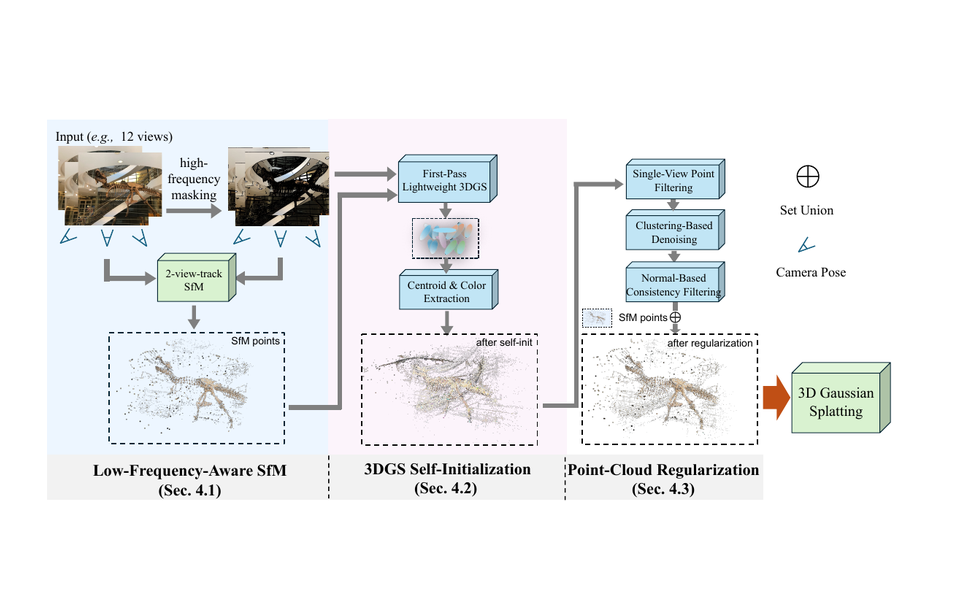
IEEE TVCG 2026
Builds a stronger sparse-view 3DGS initialization pipeline using frequency-aware SfM, 3DGS self-initialization, and point-cloud regularization.
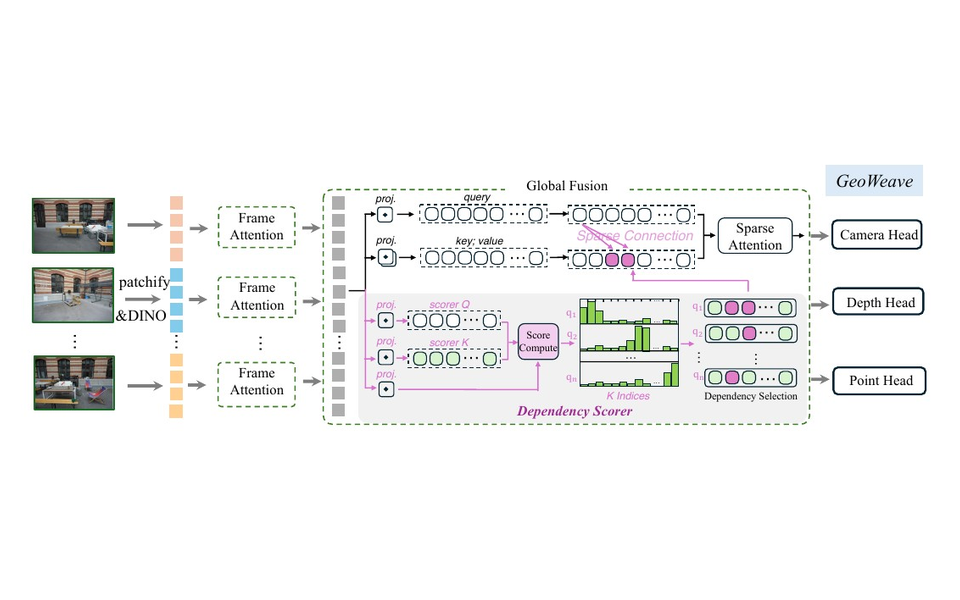
SIGGRAPH Asia 2026
Introduces selective cross-view communication to improve pose and point-cloud reconstruction under weak overlap and distracting views.
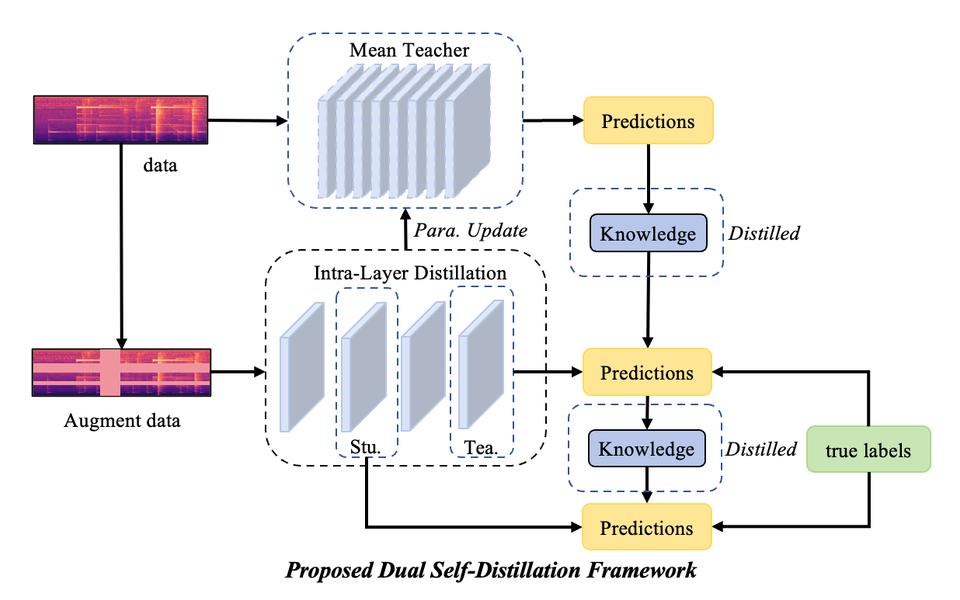
ICME 2026
Improves robust audio tagging through hierarchical intra-layer supervision and EMA-based mask-consistency self-distillation.
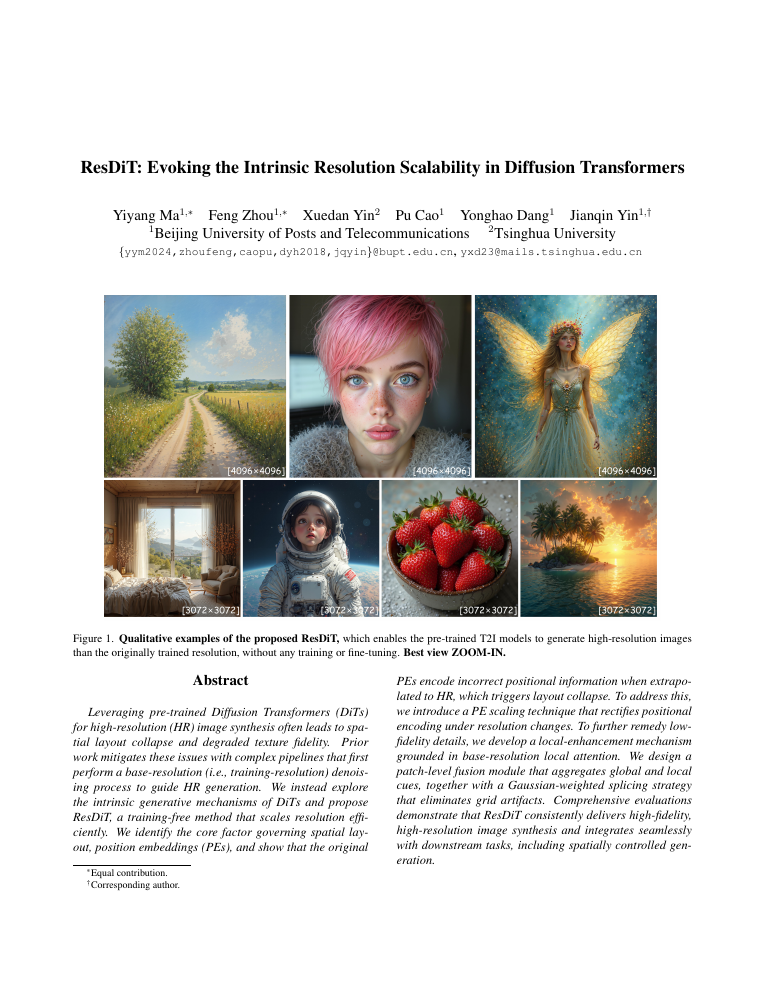
CVPR 2026
Studies resolution extrapolation in Diffusion Transformers through positional encoding, attention receptive fields, and frequency-aware detail preservation.
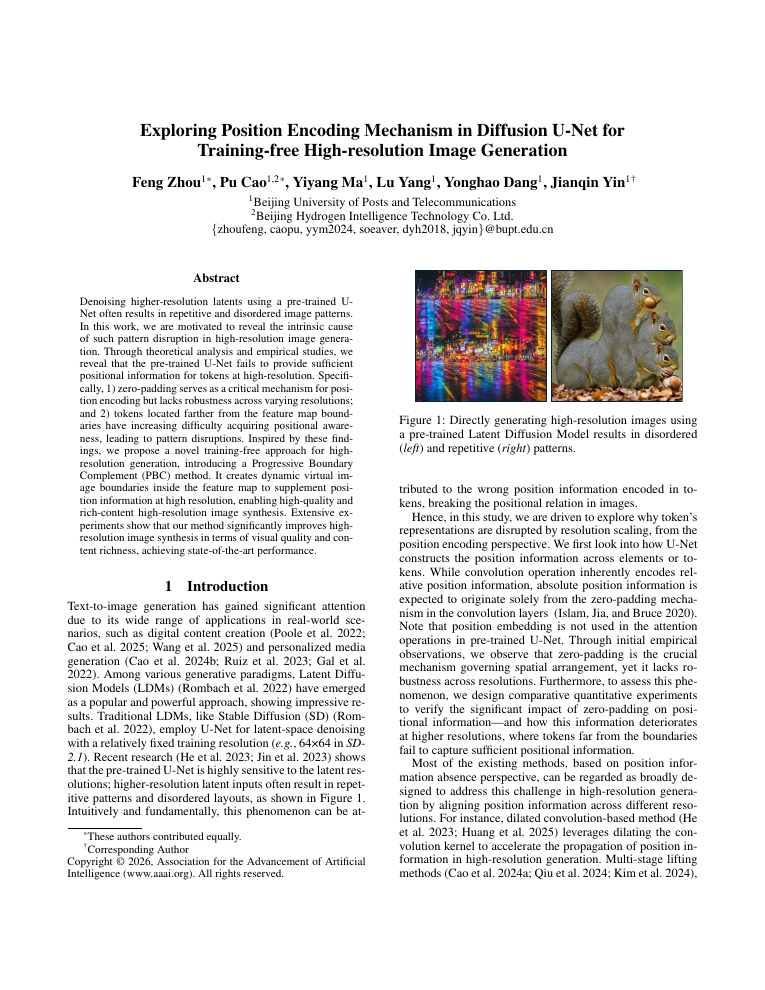
AAAI 2026 · Oral Presentation
Reveals the implicit positional role of convolutional zero padding and introduces a training-free boundary-complement strategy for high-resolution diffusion inference.
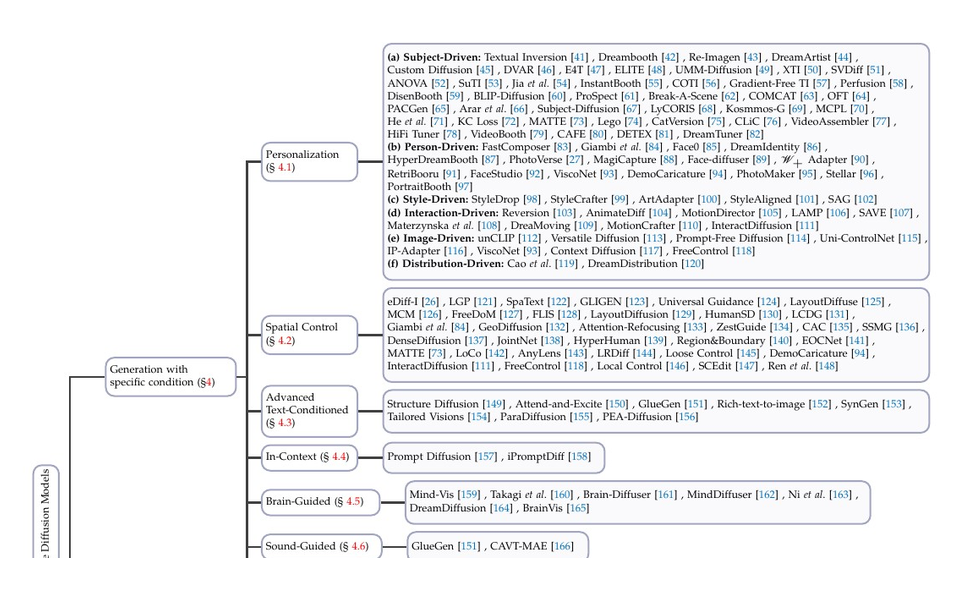
IEEE TPAMI 2025
Surveys controllable text-to-image diffusion across condition injection, structural control, editing, and personalization.
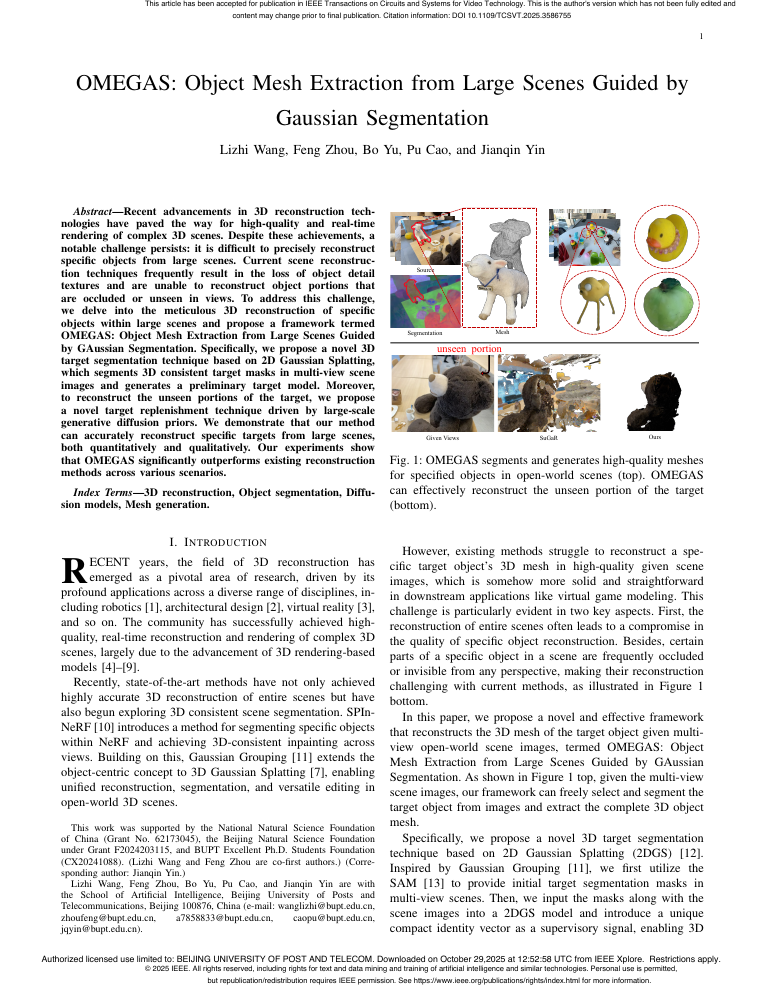
IEEE TCSVT 2025
Extracts object-level meshes from large 3D scenes using Gaussian segmentation and diffusion priors for occluded regions.
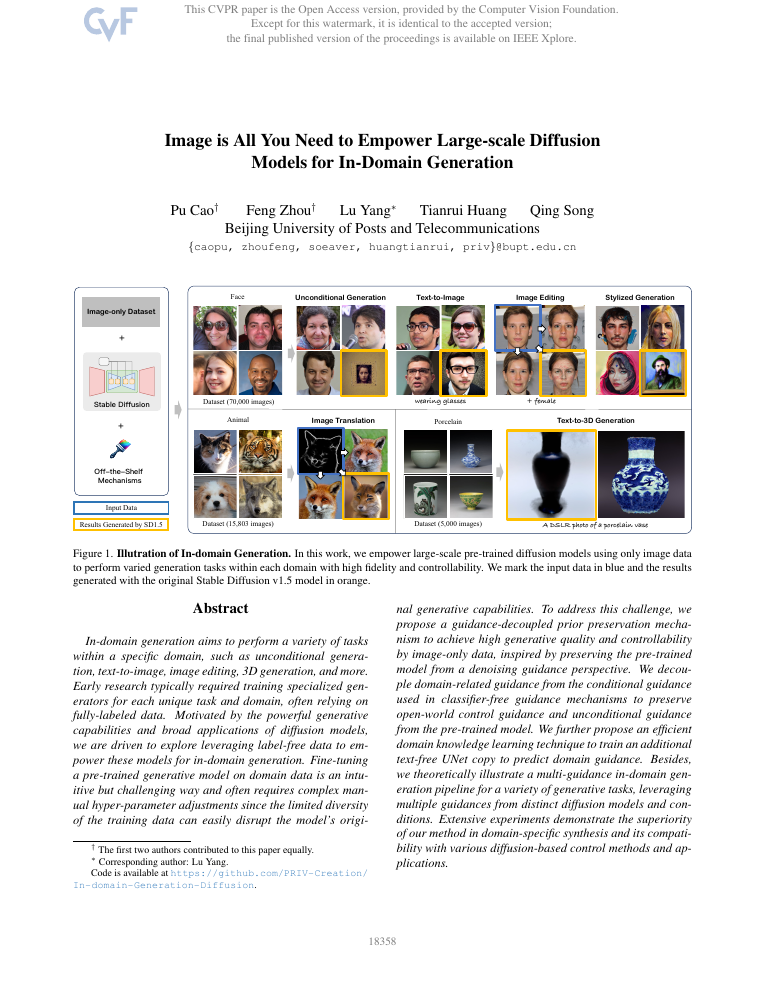
CVPR 2025
Transfers controllable generation capabilities to image-only target domains through guidance-decoupled prior preservation.
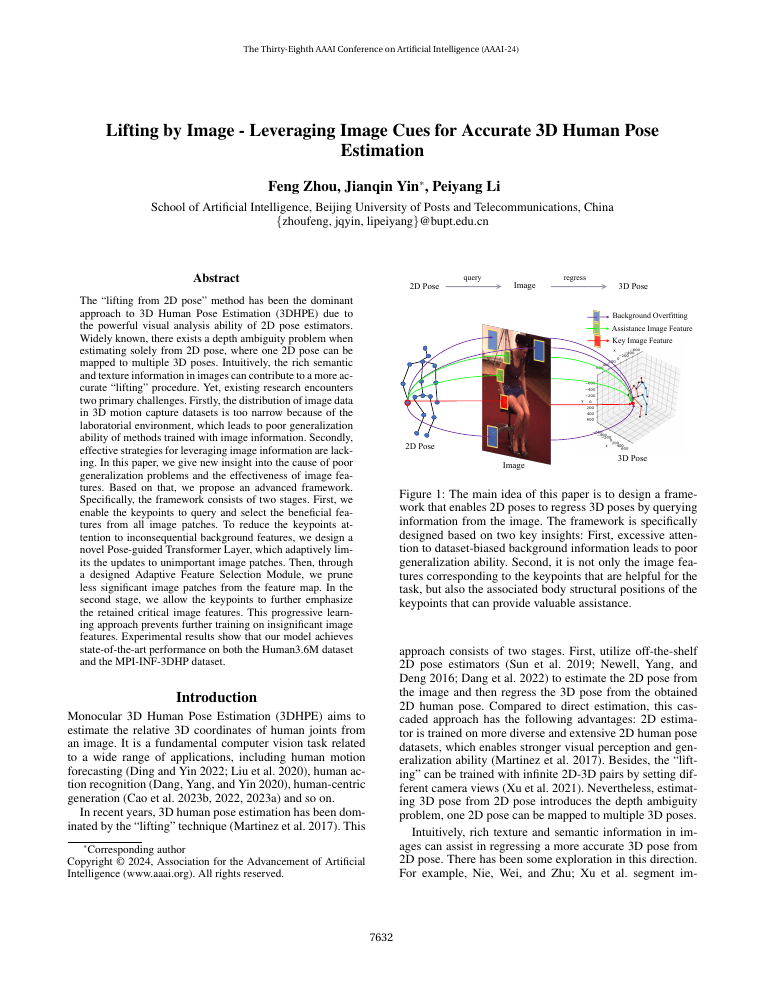
AAAI 2024
Uses pose-guided attention and adaptive feature selection to improve image-aware 2D-to-3D human pose lifting.
My research journey has unfolded in two stages.
The first began in the summer of 2022. During this period, I entered computer vision through concrete research problems and gradually developed my own understanding of deep learning. Rather than committing to a fixed direction, I focused on building a broad view of the field. Over time, I moved beyond individual models and began to think more systematically about how visual problems are formulated, how data and supervision shape what a model learns, and how architecture and optimization affect its generalization. This process gave me a stronger technical foundation and a broader perspective on how different ideas and learning paradigms relate to one another.
The second stage began in late 2025. By then, I had started to form my own view of how artificial intelligence was evolving, and my personal research direction gradually became clearer. I found a long-term goal that I hope to pursue throughout my career: contributing to intelligent systems capable of learning from and reasoning about the physical world, with the ultimate ambition of helping humanity deepen its understanding of nature and perhaps even uncover new physical laws.